

JAMAICAN MUSIC
Written by
Havana White
Every country has their own culture with the infusion of many features. Jamaican culture has a strong charisma which has influenced many people around the world. From around the mid 20th century, numerous amounts of Jamaicans migrated to various countries, places like England, The United States and Canada.
A large majority of Jamaicans have their roots tied to Africa, and there are also many Jamaicans who have a blend of African, and European roots. The Jamaican motto is “Out of many, one people.” The island’s people are classed as “cool, and laid back. A large majority of Jamaican society for the most part, express themselves fully. Not afraid to speak what is on their mind to someone, whether the person likes what they say or not, this is a strong part of the culture.
Music sits at the top of the culture. For a small island country with only around 3 million people, Jamaican music has stamped itself well globally.
Mento Music – The dawning of Jamaican music was a genre titled Mento music. A style made up from rhythms from Africa, and a fusion of traditional folk, it was similar to calypso, with its own essence. Instruments used were guitar, banjo, musical whistles, hand drums and rhumba box, (in Africa, it’s called kalimba.) Rhumba was the bass, meanwhile lyrics glided life stories.
Artists such as Count Lasher, Stanley Beckford, and The Jolly Boys, became very popular, and are just a few artists to mention.
Ska Music – Ska emerged in the 1950’s, a style with an upbeat tempo, off-beats, along with a bouncing rhythm. A musical fusion of rhythm & blues, and an energy groove of a melodic jazz sound. With its opening in the 50’s, it wasn’t until the 1960’s that it gained its international popularity. It was the Jamaican producer, “Clement Seymour Dodd, aka Sir Coxsone,” who began to fire Ska’s popularity with his production skills.
Artists such as Jimmy Cliff, Prince Buster, Toots & the Maytals, and The Skatalites, brought the style to attention, as well as, The Wailers, Prince Buster, Justin Hinds & The Dominoes. The Ska musical journey brought Songs such as (Simmer Down, 54-46 That’s My Number, carry go bring come, Rudy a message to you, )
The dance of ska was a high energy dance with hands pulsating up, and down in the air, both music & and dance received popularity in various countries, particularly in the United Kingdom.
Rocksteady – Slowing down Ska music, Rocksteady became the follow up genre. Still a style to dance to, but with more of a laid-back feel, it became the opener for Reggae music. In 1966, Hopeton Lewis released his first song titled “Take it easy,” the song became widely popular. Jamaican musicians were attentive to various genres like Jazz, and rhythm & Blues. After slowing down the tempo of Ska, bass lines became a dominant force within the sound, guitars shimmered offbeat accents, and a new style was created. Rocksteady became another genre of Jamaican music. Singers such as Alton Ellis, Delroy Wilson, Desmond Dekker, Ken Booth, and The Slickers, alongside many artists & musicians. The steady slower sound of Rocksteady became the prototype of the next genre to come.
Reggae Music – Just before the 1960’s gave way to the 1970’s, Reggae music landed. A band named “Toots & the Maytals” released a song titled, “Do the Reggay,” and not long after, the name “Reggae” became the title for a new genre.
Jamaica in the 1970’s was an extremely political time, which caused political violence. Reggae music became a platform to express people’s thoughts and feelings, It was a style similar to Rocksteady, with a slightly slower tempo with off-beat accents.
Rastafari, is a spiritual movement that emerged in the 1930s. An ideology entwined with the roots of Africa, nature, and spirituality, referring to God as “Jah.” In the 1970’s Rastas’ began forming a strong alliance with Reggae, it became a way for them to address life’s struggles, they also sang songs of love. Not all Reggae singers were Rasta’s, but the genre became a storybook for the Rasta movement.
From the late 1940’s, Jamaicans were invited to England as workers in the post-war era to help uplift the country, and over time, a large number of Jamaicans settled in the UK. When they arrived in England, they brought their culture, along with their music. Jamaican communities tended to stay around each other, and the places they tended to stay were Notting Hill, Ladbroke Grove, and Brixton. In those times, racism was high and so Africans and Afro Caribbean’s tended to stay connected. House parties became a regular occurrence, and music was a way to let loose feelings of stress from the hardships of living, as well as the racism they were encountering. After some time, Jamaican music became popular in London, there was a crossover with Jamaican and English musicians, and groups formed, such as The Specials, Madness and The Selector.
Voicing the names of Reggae singers would take a long time to mention, so here are a few to mention, (Jimmy Cliff, Peter Tosh, Ken Booth, Burning Spear, Mighty Diamonds, Dennis Brown, Freddy McGregor, Sugar Minot, Beres Hammond, and last but not least, the most famous all-time Reggae singer, Bob Marley & The Wailers.) To this day, Bob’s music is just as popular, as it was when he was alive. There have been countless Reggae artists, a few more to mention are, Sizzla, Luciano, Shaggy, Taurus Riley, Maxi Priest, Sanchez, and Morgan Heritage.
Reggae music has come a long way and is most probably the most respected out of all Jamaican genres. There have also been artists from various other countries who have jumped on the Reggae music style.
Lovers Rock – As time passed on, many people in England loved reggae music, especially the descendants of the Caribbean, and there were various women singers who began to spring up. After linking up with Reggae producers, singers such as Louisa Mark, Janet Kay, Carol Thomson, Deborah Glasgow, Jean Adebambo, and Sandra Cross, sang a slightly new style of reggae, mostly songs about love, the new style was named “Lovers Rock.” Various male Reggae singers became known for singing Lovers Rock also, artists such as Gregory Issacs, John Holt, Frankie Paul, and Dennis Brown, to name a few. But Lovers Rock in England will always be remembered as the genre sung by the female ladies.
Dancehall Music – Dancehall music started to show up in the late 1970’s, and by the 80s, it became a new Jamaican genre, which was also coined with the name Ragga, and Bashment. In some of the poorer areas in downtown Kingston, Sound Systems would travel around, play music outside, and locals would come out to enjoy a music night. Most of the community folk of that time, couldn’t afford to go uptown to various music events, and so the opportunity to go outside and dance the night away became popular for many.
Sound systems belonged to a crew of people. They would pull off massive speakers off the vans, wire up the music systems, and then, the selectors would select the vinyls to play. DJ’s became the toasters who would chant patois over the instrumentals. The A-sides of the vinyl’s were the lyrical song and the B-sides were instrumentals, DJ’s would hold a microphone and chant patois over the instrumental. The local people danced to the rhythms, and enjoyed hearing their cultural language on the mic. Both groups fused together, the dancers needed the music, and the sound system guys needed the dancers.
King Tubby who was a sound engineer who was highly skilled in the electronics of music production and mastering. He helped various sound systems, and eventually started his own. Other famous producers were “Sir Clement Coxsone Dodd” and Lee Perry. King jammy is also another famous producer.
The first DJ artists to hit the dancehall scene were U-Roy, Yellowman, Prince Buster, Sister Nancy, and Tenor Saw. The early days of dancehall music started off in a slower stance, the Lyrics were used to express whatever they needed to say. “Under mi sling” by Wayne smith became a hit song with its strong digital sound.
Once the 90s hit, dancehall music became the most popular genre played by sound systems, each sound system had their own name, the first one being, “Tom the great Sabastian,” there were many more, a few to mention are, Killamanjaro, Black Scorpio, Black Chiney, and Bass Odyssey. Jamaican sound systems also became popular in England, and America.
Once dancehall sealed itself as a genre, it became as popular as Reggae.
Sound Systems played outside, not just on a weekend, but also various nights in the week, and would play all through the night. The new digital electronic upbeat sound, had the type of rhythm that if you heard it, it was hard to keep still.
Dancehall music started to lift up internationally in countries like England, America, and Canada. Shabba Ranks was the first DJ artist who lifted the genre internationally, and he also gained a Grammy award for his album, “As Raw as Ever.” His most popular international hit was “ting, a ling.” From that time onwards, Dancehall music grew fast, and many DJ artists came along, a few to mention are Admiral Tibbet, Buju Banton, Bounty Killer, Beanie Man, Elephant Man, Shaggy, there are a ton more. Then an artist by the name of Vybz Kartel came along, a very clever DJ with a unique tone, and a clever DJing style, he became hugely popular, both in and out of Jamaica. Since his time, there has been a big range of DJ’s artists. The genre is still around today, Dancehall music of the 90s and early 2000’ was at its hotspot internationally, but it can become as popular internationally again.
Havana White ©
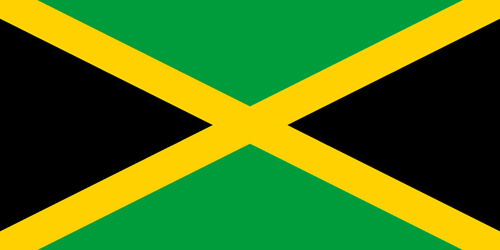
JAMAICA
The island of Jamaica takes a significant place in the world as a country of music. Reggae & Dancehall have influenced many people across the continents. Music & dance go hand in hand, and Jamaicans use it as a tool to release the pressure of life’s struggles. Everywhere you go across the island, you hear music coming from many places.
The rich array of Reggae artists is far too many to mention, the various styles from past to present have been Mento, Ska, Rocksteady, Dub, Reggae, Dancehall, Lovers & Culture.
Bob Marley was the reggae artist who put Jamaica on the map, but there is an amazing abundance of singers & DJs from way back until today who continue to uphold Jamaica as a place of energising music.
Havana White ©
Content Writing
Features
- Product Reviews
Contact email
- connect@muzatik.com
- havana@muzatik.com